Hey everyone, if you’ve ever worked with DC motors long enough, you’ve probably run into a situation where your motor’s overspeeding, or you need to stop a heavy load fast without slamming into something. As a DC motor supplier, I get questions about this all the time—most folks ask, “How do you make a DC motor stop smoothly and safely, especially when it’s moving big stuff?” The answer? Dynamic braking. It’s one of those workhorse tech bits in motor control that everyone should understand, but not enough people break down simply. Today, let’s talk about how it actually works, why it’s way better than other braking methods, and why it matters for whatever project you’re building. DC Motor
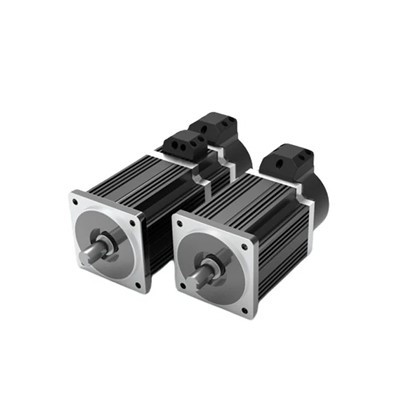
First, let’s level the playing field for anyone who’s not a motor geek by trade. A DC motor, when it’s running, isn’t just a device that spins when you feed it power. It’s also a generator, right? Back in the day, I had a customer who asked, “Why does my motor get warm when I’m not even pushing it?” That’s back EMF—electromotive force generated by the spinning armature cutting through the magnetic field. It’s like the motor’s own little voltage push that fights the incoming power. That back EMF is the secret sauce for dynamic braking, because we can turn that unwanted push into something that stops the motor dead.
Let’s start with the basics of normal operation. When you run a DC motor, you connect the armature to a DC power source—let’s say 24V, super common for industrial gear. The power source pushes current through the armature windings, which interacts with the stator’s magnetic field to make the armature spin. But as soon as that armature turns, back EMF pops up. The faster it spins, the stronger that back EMF, until it equals the applied voltage (that’s why a no-load motor only draws a tiny current—there’s almost no voltage difference pushing current anymore).
Now, what happens when you want to stop? If you just turn off the power and let it coast, that motor’s gonna keep spinning for a while, especially if you’re hauling a heavy load like a conveyor belt or a crane hoist. Friction brakes wear out fast, especially if you’re stopping 10 times a minute—been there, seen customers go through a set of brake pads in a month. That’s where dynamic braking comes in. Here’s the core trick: when you cut the main power to the armature, you don’t just leave it hanging. You connect the armature terminals to a resistor (we call it a braking resistor) instead of opening the circuit. That’s it. No fancy switches, no magic—just a quick switch of how the armature is wired.
Wait, let’s make that concrete. Let’s say we had our 24V motor running at full speed. Cut off the 24V supply, flip a relay, and now the armature is connected to that resistor. Remember that back EMF? It’s still there, because the motor’s still spinning. That back EMF now pushes current through the armature and the braking resistor. And what happens when current flows through a resistor? Heat. That heat is energy—we’re converting the kinetic energy of the spinning motor (and its load) into electrical energy, which gets burned off as heat in the resistor. Less energy = slower spin, and eventually zero. That’s the dynamic part—we’re using the motor’s own motion to generate and dissipate energy, instead of fighting it with external friction.
I should mention the different types of dynamic braking, too, because not all are the same. The two big ones are shunt dynamic braking and series dynamic braking, but for most of our customers, shunt is the go-to, so let’s focus on that first. Shunt dynamic braking means the braking resistor is connected in parallel (shunt) with the armature terminals once the main power is cut. That way, all that back EMF current has a clear path through the resistor, no wasted energy. For smaller motors—like the ones used in automation or small conveyors—this is super simple to wire, no extra parts needed except the resistor and a relay.
Series dynamic braking is used more for higher-power setups, like big crane motors or mining equipment. In that case, the braking resistor is connected in series with the armature, instead of parallel. Wait, why? For motors that run at really high loads, the back EMF is strong enough that parallel might pull too much current, or the resistor would need to be huge. Series limits the current, so you can use a smaller resistor. The downside is it’s a bit more complex to set up, so we usually reserve that for customers with 5HP+ motors or heavy loads.
Here’s something I get asked all the time: how is this different from plug braking? A lot of people mix them up, especially when they’re new to DC motors. Plug braking is when you reverse the polarity of the power supply to the armature, right? So you’re pushing current the opposite way, which creates a magnetic field that fights the spin faster. Sounds good, but it’s way harsher—you get that jolt when you reverse power, which is bad for gearboxes, belts, or fragile loads. I had a customer a few years back who used plug braking on a custom packaging line, and every time they stopped, they’d crack a plastic part on the box because of the jolt. Dynamic braking is smooth—no jolts, just a slow, controlled stop, because it’s using the back EMF to push against the motion gradually. And since we’re not dumping all that energy back into the power grid (though some setups do that, called regenerative braking, which is a whole other thing), it’s way more efficient than friction brakes for frequent stops.
Wait, let’s circle back to back EMF because that’s the make-or-break part. If there was no back EMF, dynamic braking wouldn’t work at all. Let’s say you have a motor that’s stalled—turn off the power, connect the braking resistor, and nothing happens, because there’s no motion, no back EMF to push current. That’s why dynamic braking only works when the motor’s spinning; it’s meant for stopping, not holding a load. If you need to hold a load up, you still need a friction brake, but dynamic braking takes over the stopping part, so the friction brake only engages once the motor’s almost stopped, which extends its life by like 10x—game changer for heavy loads that stop all day long.
Another common question: what about the braking resistor itself? It’s not just a random resistor from your parts bin. It has to be sized right for the motor’s current and the total kinetic energy of the load. If you use a resistor that’s too big, not enough current flows, so you stop way too slow. Too small, and you’ll get too much current, which can overheat the armature or burn out the resistor. As a DC motor supplier, we never just sell motors and call it a day—we’ll help size the right braking resistor for your exact setup, because getting that wrong is a quick way to a broken motor. I learned that the hard way early on: a customer bought a 1HP motor from us, grabbed a random resistor off Amazon, and fried the armature on the first test run. Now we always walk through that sizing step, no exceptions.
Let’s talk about real-world examples, because theory’s great, but seeing it in action makes it click. Last year, we worked with a company that builds automated guided vehicles (AGVs) for warehouses. Those AGVs stop every 10 feet or so, moving pallets that weigh thousands of pounds. They were using friction brakes before, but the brakes were wearing out so fast they had to replace them every 2 weeks, which cost them thousands in downtime and parts. We swapped in dynamic braking, paired with a small holding friction brake, and now the only time they use the friction brake is when the AGV is completely stopped, so the brakes last 6 months, easy. The stops are smooth, no jolting that would spill a pallet, and their maintenance costs dropped by 70%—that’s the kind of win we love to see.
Another example: conveyor belts for mining. Those belts are hundreds of feet long, carrying tons of ore, and stopping too fast can cause the whole line to slip, damaging the belt. Dynamic braking lets them slow the conveyor gradually, which prevents that, and since the energy is burned as heat in the resistor, there’s no need for expensive grid tie-ins to send energy back, unlike regenerative braking (which we also offer, but that’s for setups where you can reuse that energy, like elevators). For most mid-sized to heavy DC motor applications, dynamic braking is the sweet spot.
Wait, what about low-speed applications? Let’s say a motor driving a small lathe, or a door opener. Dynamic braking still works, but at low speeds, the back EMF is weaker, so the stopping force is less. That’s why for really slow, precise stops, you might need to tweak the resistor size a bit, or add a small holding brake. But for most cases, it’s more than enough.
I should also address a common misconception: some people think dynamic braking wastes energy, because it’s turning kinetic energy into heat. And yeah, compared to regenerative braking, it doesn’t send energy back to the grid. But when you factor in the cost of replacing friction brakes, downtime, and damage to equipment from hard stops, it’s way more energy-efficient overall. Friction brakes turn that kinetic energy into heat too, just in the brake pads, not a resistor. The resistor is usually mounted somewhere out of the way, often on the motor frame or near the control panel, and it’s built to handle that heat—no problem there.
Let’s walk through a step-by-step run-through to make it super clear, no jargon:
- Motor is running: DC power is connected to the armature, spins, back EMF is generated (small at start, equal to power voltage at full speed).
- You trigger a stop: Cut the main power supply to the armature, flip a relay to connect the armature terminals to a braking resistor.
- Spinning motor generates back EMF: Even without power, the armature is still cutting through the magnetic field, so that back EMF pushes current through the armature and resistor.
- Energy conversion: Current flowing through the resistor makes heat. That heat is all the kinetic energy from the motor and load being dissipated.
- Motor slows to stop: As speed drops, back EMF gets weaker, so less current flows, less braking force, until the motor is fully stopped.
- (Optional) Engage holding brake: Once at zero speed, a small friction brake kicks in to hold the load, if needed.
That’s it. That’s the whole process. No rocket science, just leveraging a property that DC motors already have.
Now, why does this matter for your project? Let’s say you’re building a custom automation line, or a lifting device, or anything that uses DC motors and needs controlled stops. If you’re still using friction brakes for frequent stops, you’re wasting money on replacements and dealing with downtime. Dynamic braking is a cost-effective, reliable solution that extends the life of both your motor and your brake components.
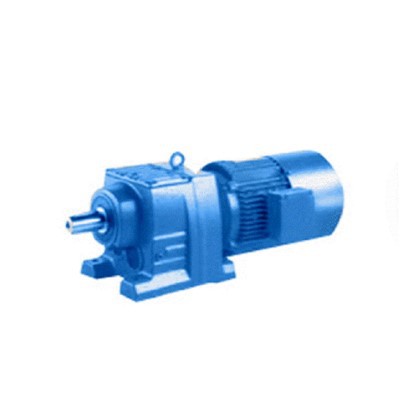
As a DC motor supplier, we don’t just sell parts—we help you pick the right setup for your needs. Whether you’re a small business building a new conveyor, a mid-sized company upgrading your AGV fleet, or a large operation with heavy industrial motors, we can walk you through sizing the right motor, the right braking resistor, and the right control setup for dynamic braking. We’ve seen firsthand how much of a difference this makes, and we’re here to answer any questions, no matter how basic or specific.
Servo Motor If you’re dealing with frequent stops, worn out brakes, or jerky stops that are damaging your equipment, reach out—we’d love to talk through your project and find the right dynamic braking solution for your DC motor system.
References
- Fitzgerald, A. E., Kingsley, C., & Umans, S. D. (2003). Electric Machinery (6th ed.). McGraw-Hill.
- Boldea, I., & Nasar, S. A. (1998). Electric Drives. CRC Press.
- DC Motor Dynamic Braking Application Guide. Schneider Electric Industrial Automation, 2021.
- Control Techniques. (2019). “Dynamic Braking for DC and AC Drives.” Technical Whitepaper.
Zibo Auric Mechanical and Electrical Technology Co., Ltd.
As one of the leading dc motor manufacturers and suppliers in China, we warmly welcome you to buy advanced dc motor for sale here from our factory. All customized motors are with high quality and competitive price.
Address: B419, High-tech Entrepreneurship Park, High-tech Zone, Zibo City
E-mail: cui@auricmotor.com
WebSite: https://www.auricmotor.com/
