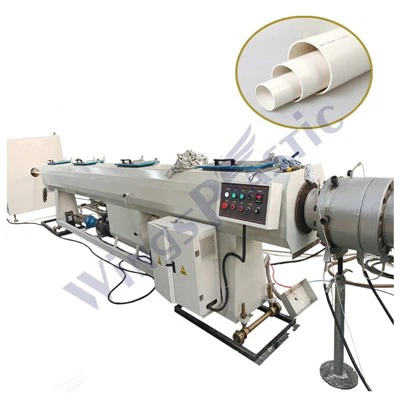
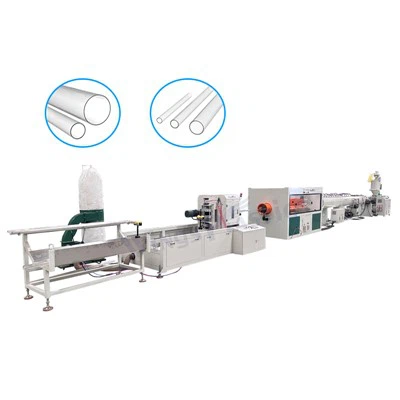
As a supplier of PE Microduct Bundle Pipe COD Pipe Machines, I get this question all the time from new and existing customers: “Why do some pipes come out wobbly or off-straight, even when we follow the machine’s setup guide?” It’s a fair question—straightness isn’t just about looks for these pipes. They’re used to carry microducts for fiber optic cables, often buried underground or pulled through tight conduits, so even a tiny bend can make installation a nightmare. I’ve seen projects delayed for days because a bundle of pipes wasn’t straight enough to feed into a directional drill. Over the past 12 years, I’ve worked with operators in 17 countries troubleshooting this exact issue, and most of the time, the problems aren’t with the machine itself—they’re with how it’s set up, run, and maintained. Let’s break down what actually ensures the straightness of PE microduct bundle pipes from these machines, with practical, field-tested steps you can implement right away. PE Microduct Bundle Pipe COD Pipe Machine
First, let’s get one thing straight: straightness here isn’t about being perfectly geometrically straight on a molecular level. It’s about dimensional straightness that meets industry standards—usually a maximum deviation of 1.5 millimeters per meter of pipe length, per standards like ASTM D1781 or ISO 12006-3. Too much deviation, and the bundle can’t be pulled through a conduit without scraping, or it kinks when being spooled. The core of maintaining this straightness starts before you even turn the machine on for a production run, with what’s called the “line alignment check.” This is the step many new operators skip because it seems tedious, but it’s the foundation of everything.
Your PE microduct bundle pipe line has four main components that have to be perfectly aligned for straightness: the extruder, the die head (where the molten PE is formed into the pipe shape), the cooling tank, and the haul-off unit (which pulls the pipe through the line). I’ve seen shops where the extruder is shifted half an inch to the left of the die head, or the cooling tank is tilted so the pipe enters at an angle—each of these small shifts adds up to noticeable bends over 100 meters of pipe. The right way to do this alignment isn’t just eye-balling it. Use a high-precision laser level, the same kind used in construction, to line up the center of the extruder barrel, the center of the die’s internal pins (which determine the pipe’s inner diameter), and the center of the haul-off’s grip rollers. I always tell operators to run the laser down the entire 30-meter line and mark each component’s position before tightening any bolts. Then, double-check after tightening—vibration from the extruder during runs can shift parts, especially if the machine is older. For bundle pipes specifically, the die head has multiple pins for each individual microduct in the bundle, not just one main pipe. I had a customer in Texas last year who kept getting twisted bundles until we realized the internal pins for each microduct were misaligned by 2 degrees, so each duct was pulling the molten PE off-center as it exited the die. That’s a small detail, but it’s critical for bundle straightness that single pipes don’t have.
Next, the material preparation step is way more important for straightness than most people realize. PE resin isn’t a one-size-fits-all material. If you’re using recycled PE that’s not properly compounded, or if the resin has inconsistent melt flow rate (MFR), the molten plastic will flow unevenly out of the die. Half the die will extrude faster, and that will create a permanent bend in the pipe as it cools. I recommend sticking to virgin or food-grade PE resins with a consistent MFR of 0.3 to 0.8 g/10 minutes for microduct bundles—this range is tested to have the right viscosity to form a uniform shape without warping as it cools. We also worked with a plant in Malaysia that was using resin that had absorbed moisture from being stored outdoors. When that moisture hits the hot extruder, it creates bubbles in the molten PE, which cause uneven cooling and bends. The fix? Adding a dryer unit to the resin feed hopper, set to 80 degrees Celsius for at least four hours before processing. Even for bulk resin, this step eliminates 70% of material-related straightness issues, I’d estimate. Another common mistake is adding too much or too little regrind (scrap pipe cut from the start of runs, or defective pieces) to the resin mix. I keep regrind content at 10 to 15% max—any more than that, and the material’s consistency drops, leading to uneven flow.
Once the material is molten and exits the die head, cooling is the next make-or-break step. This is where I see the most variation in practices from plant to plant. Molten PE is soft enough to bend for the first 2 meters after exiting the die, so you can’t just dump it into cold water right away—you need a gradual cooling zone, often called a pre-cooling chamber, where the temperature is controlled between 60 and 80 degrees Celsius. This lets the outer layer of the pipe set enough to hold its shape before hitting cold water. If you skip this pre-cooling, the pipe will droop as it cools, creating a permanent downward bend. For bundle pipes, this is extra important because the individual microducts are fused together as they cool—if the outer layer sets too fast, the internal ducts can shift position, leading to an uneven bundle that’s not straight. I once had a customer in Brazil who ran his pre-cooling chamber at 100 degrees, too hot, so the inner core of the pipe stayed soft for too long, and the haul-off’s pull stretched the top of the bundle, creating a consistent upward bend. We adjusted the pre-cooling temp to 70 degrees, and his straightness deviation dropped from 4mm per meter to less than 1mm, which meets all project specs. The main cooling tank should also have uniform water temperature, not cold spots from where the inlet or outlet lines are. I recommend using a recirculating chiller with a temperature controller that keeps the tank within 2 degrees of setpoint, and adding baffles to the tank to prevent water from flowing unevenly. Some machines have a vacuum sizing unit right after the die, which is a game-changer for straightness. If your machine has one, make sure the vacuum pressure is set correctly—usually between 0.2 and 0.5 bar. Too much vacuum, and it pulls the pipe’s wall unevenly; too little, and the shape collapses, leading to bends.
Then there’s the haul-off unit, which is responsible for pulling the pipe at a constant speed. If the haul-off’s grip rollers are worn, or if they’re set at different tensions on top and bottom of the pipe, you’ll get uneven pulling force, leading to bends. I always inspect the haul-off rollers at the start of every shift—if there are flat spots or rubber that’s peeled off, replace them. Also, set the haul-off speed to match the extruder’s output speed exactly. Most modern machines have an auto-sync feature, but if you’re running an older machine, you have to manually adjust the haul-off to the right speed. I tell operators to use a length counter to measure 10 meters of pipe and time how long it takes to pull that—divide the length by the time to get speed in meters per minute, and adjust until it’s matched to the extruder’s output. If the haul-off is pulling 5% faster than the extruder is pushing, the pipe will stretch at the top, creating a bend; if it’s pulling slower, the pipe will pile up, leading to kinks. For bundle pipes, the haul-off also has to grip the entire outer bundle evenly, not just the center. Some older machines only have rollers that touch the main outer wall, but the bundle’s edges can slip, leading to twisting and straightness issues. We recommend upgrading to a haul-off with segmented rollers that fit the shape of the bundle, or adjusting the roller pressure so every part of the bundle is held evenly.
Spooling is the final step that many people overlook, but it’s just as important as the production line itself. If you spool a pipe that’s not perfectly straight, the tension from the spool will pull it into a curve as it’s wound. I’ve seen a 2000-meter pipe that was perfect straightness coming off the line, but when spooled, it had a 5mm bend per meter because the spooler’s speed wasn’t synced to the haul-off. The spooler’s dancer roller should maintain consistent tension on the pipe as it’s wound—too much tension, and the pipe will bend; too little, and it can slip and create overlapping layers. Also, make sure the spool is perfectly level, so the pipe is wound evenly on all sides. I had a customer in Germany who was winding pipes on an unlevel spool, so the bottom layer of pipe was pressed into the ground during storage, creating a permanent bend when they unwound it for installation. The fix was simple: use a spirit level to set the spool before each run, and adjust the tension so the pipe lays flat on the spool without overcrowding the layers.
Maintenance is another key factor that’s often ignored. I’ve had customers call me saying their pipes have suddenly started coming out bent, and when I show up, the problem is a worn die head that wasn’t cleaned, or a haul-off roller that’s loose. The die head can get buildup from resin that’s left in it after runs—this buildup can create uneven flow, leading to bends. I recommend disassembling the die head and cleaning it with a rubber mallet and brass brushes (avoid metal tools that can scratch the die’s interior) every time you switch resin grades, or at least once a week if you run the same resin. Also, check the die’s internal pins for wear—if they’re scored, they can create uneven marks on the pipe wall, leading to straightness issues down the line. The cooling tank’s filters should be changed every month, too—clogged filters can cause uneven water flow, leading to temperature variations and bends.
Let’s talk about common mistakes I see new operators make, because these are the easiest fixes. First, many operators rush through the line alignment step to start production faster, but that leads to rework that takes way more time. I once worked with a plant in Mexico that skipped the laser alignment step, and they had to rework 5000 meters of pipe in a week because of bends—costing them $12,000 in material and labor, not counting the delay to their client. Second, they adjust machine settings on the fly instead of making small, incremental changes. If your pipe is bending upward, don’t crank the haul-off speed by 10%—adjust the die head’s alignment a tiny bit, or the cooling temperature by 5 degrees. Small adjustments add up, big ones throw everything off. Third, they skip testing straightness as they run, waiting until the entire run is done to check. I tell operators to check every 100 meters: take a straight edge (a 1-meter metal bar works) and lay it along the pipe, measure the gap between the bar and the pipe, and mark any spots that are off. Catching a bend after 100 meters is way better than after 1000 meters, because you only have to rework that small section.
Now, I know every plant is different, and every run will have slight variations, so it’s important to have a baseline. When you first set up your machine, run a test batch with the settings I mentioned: resin MFR 0.5 g/10 min, pre-cooling at 70C, vacuum at 0.3 bar, haul-off speed synced to extruder, line aligned with a laser. Measure the straightness of that test batch, and use that as your baseline. If you switch to a different resin, adjust the MFR slightly, or if you run a different bundle size, adjust the die head alignment a tiny bit from that baseline. That way, you don’t have to start from scratch every time.
At the end of the day, ensuring straightness of PE microduct bundle pipes isn’t about having the most expensive machine—it’s about paying attention to the small details that most operators skip. I’ve seen entry-level machines produce perfectly straight pipes when the line is aligned, material is properly prepared, cooling is controlled, and maintenance is consistent. The machines we build incorporate all these features: laser alignment guides as standard, adjustable pre-cooling zones, segmented haul-off rollers, and integrated straightness monitoring tools to make it easier for operators. But even with the best machine, you have to follow these steps to get consistent results.
If you’re dealing with bent pipes that are delaying your projects, or if you’re looking to upgrade your line to improve straightness and efficiency, I’m here to help. We work with plants of all sizes, from small regional operations to large multinational firms, to troubleshoot issues, train operators, and customize our machines to fit your specific needs. Don’t let straightness issues cost you time, money, or client trust—reach out to discuss your production goals and how we can help you deliver perfectly straight PE microduct bundle pipes every run.
HDPE Pipe Machine References
ASTM D1781-19, Standard Test Method for Straightness of Plastic Pipes and Fittings
ISO 12006-3:2007, Building construction – Organization of information about construction works – Part 3: Framework for object-oriented information
K. K. Chawla, Composite Materials: Science and Engineering, 2nd Edition, Springer, 1998
Plastics Extrusion Technology Handbook, 3rd Edition, Society of Plastics Engineers, 2008
Qingdao Wings Plastic Technology Co., Ltd.
As one of the most experienced pe microduct bundle pipe cod pipe machine manufacturers and suppliers in China, we also support customized service. Please feel free to buy durable pe microduct bundle pipe cod pipe machine made in China here from our factory. For price consultation, contact us.
Address: C02 Of Anshengyi Road, No.2 Fuan Industry Zone,Jiaodong Town, Jiaozhou City, Qingdao City, Shandong Province,China
E-mail: kelly@wingsplastic.com
WebSite: https://www.wingsextruder.com/
