If you’ve ever spent a day on a job site with a line boring accessory user, or stood next to one of our team members walking a machinist through a tricky bore alignment, you’ve probably heard the same question pop up: “Do my line boring accessories need regular maintenance?” Line Boring Accessories

For years, I’ve heard this from new and long-time customers alike—from small marine repair shops that keep a line boring bar tucked in the back of their truck, to large power generation facilities that run a fleet of these tools 12 hours a day, five days a week. The short answer is yes, but the why, the how, and the real cost of skipping maintenance is where most people miss the mark. As someone who’s built this business around supplying line boring accessories for over a decade, I’ve seen firsthand what happens when a user waits for a breakdown instead of sticking to a consistent maintenance routine.
Let’s start with what line boring accessories actually do, because that context is everything. These aren’t the cheap, disposable tools that show up in a box of random hardware. A typical line boring setup for heavy equipment repair includes a line boring bar (often alloy steel, heat-treated to withstand 10,000+ PSI of torque), boring heads, alignment clamps, drive units, and precision measuring gadgets like dial indicators and bore gauges. Every part works together to create a consistent, perfectly straight bore in heavy equipment components—think engine cylinders for mining trucks, housings for marine propeller shafts, or mounting points for construction crane booms. Even a 0.001-inch error in bore alignment can throw off an entire engine’s power output, cause premature wear on moving parts, or lead to catastrophic failure halfway through a job.
Now, why is regular maintenance non-negotiable for these parts, specifically? Let’s break down each component and the wear they face, because it’s not just “they get dirty.”
First, the line boring bar itself. Most bars are hollow, with precision-machined splines along their length that connect to the drive unit to transfer torque smoothly. Every time you use the bar, even in a controlled shop environment, tiny metal shavings (called swarf) from the boring process work their way into those spline grooves. Over time, that swarf acts like sandpaper, wearing down the splines at a microscopic level. If you don’t clean and lubricate the splines after every use, that wear accelerates. I once had a customer in the oil and gas industry call us in a panic because their bar splines had worn so thin that the drive unit slipped mid-bore on a pump housing. By the time they brought it to us, the bar was damaged beyond repair—and they’d had to pull their entire work crew off a $200,000 repair job for two days waiting for a replacement. That’s the real cost of skipping maintenance, not just the $1,200 bar itself.
Next, boring heads. These are the parts that hold the cutting inserts, and their accuracy is the heart of any line bore job. Boring heads have fine adjustment screws that let you dial in the exact diameter of the bore to within thousandths of an inch. Those adjustment screws are surrounded by fine threads, and again, swarf from cutting gets in there. If you don’t clear that swarf, the adjustment will bind. A bound boring head means you can’t get the right diameter mid-job—you either rush an adjustment that throws off the bore, or you have to stop entirely. We’ve seen boring heads that weren’t cleaned for six months develop so much swarf build-up that the adjustment screws seized completely, rendering the head useless. Replacing a set of boring heads isn’t cheap, but stopping a job mid-process and missing a delivery deadline is far worse for a customer’s bottom line.
Alignment clamps are another often-overlooked accessory. These are the parts that hold the line boring bar in place relative to the component being bored. They’re bolted to the component’s mounting holes, and when tightened, they distribute pressure evenly to keep the bar straight. The problem here is twofold: first, clamp bolts and mounting threads can get dirty, so when you go to tighten them, you don’t apply even pressure. That leads to the bar shifting slightly mid-bore, causing an out-of-round or off-angle bore. Second, clamp pads (the rubber or plastic pieces that make contact with the component) can wear down over time. If those pads are thin or cracked, they don’t grip the component securely, which again leads to bar movement. We had a construction customer a couple years back who skipped checking their clamp pads, and halfway through boring a bulldozer blade mount, the bar shifted. They had to scrap the $15,000 blade mount and start over—all because a $10 set of clamp pads hadn’t been inspected.
Then there are the measuring accessories: dial indicators, bore gauges, and depth micrometers. These are precision tools, often with delicate internal springs and gears that can be damaged by impact, dirt, or temperature changes. Many users make the mistake of tossing these tools in a toolbox with the rest of their accessories, no case, no padding. But even a small drop of a dial indicator can throw off its accuracy by 0.002 inches—enough to ruin a bore. These tools also need regular calibration, usually every six months, to make sure their readings are correct. A customer of ours in the marine industry once told us they’d used a uncalibrated bore gauge for a year, and all their boat prop shaft bores were 0.003 inches too small. By the time they caught it, they’d had to rework 12 boat hulls at a cost of over $80,000. The calibration for that set of gauges would have cost less than $200.
Let’s talk about what “regular maintenance” actually looks like, because it’s not a 8-hour project once a year. It’s small, consistent steps that take minutes after every job, and a quick weekly check-in. As a supplier, we’ve put together a basic maintenance checklist that we give to every customer who buys line boring accessories, and 9 out of 10 customers who stick to it report 30% fewer breakdowns and a 25% longer lifespan on their accessories. Here’s what’s on that checklist:
After every use:
- Disassemble all accessories (bar, boring heads, clamps, etc.) and use a non-abrasive brush to remove all swarf and debris. Never use a wire brush on line boring bars or threads—they’ll scratch the precision surfaces, which only makes future wear worse.
- Wipe down all metal parts with a clean, dry cloth, then apply a thin coat of rust inhibitor. Even in heated shops, metal parts can develop surface rust if left exposed to moisture overnight—rust is a silent killer of precision parts, and removing it requires polishing that can leave surfaces uneven.
- For boring heads, add a drop of light oil to the adjustment screw threads to keep them moving smoothly. Don’t over-lubricate—too much oil will trap more swarf next time you use it.
Weekly (or every 50 hours of use, whichever comes first):
- Inspect all clamp pads for wear or cracking. Replace pads if they’re less than half their original thickness—this is a cheap, quick fix that prevents major alignment issues.
- Check the line boring bar’s splines for wear. Run your finger along the grooves—if you feel any rough spots or ridges, that’s early wear. A quick clean and re-lubrication can prevent it from getting worse.
- Test your measuring tools. For dial indicators, check that the needle returns exactly to zero when you release pressure. For bore gauges, compare the reading to a known standard (like a precision gauge block) to make sure it’s accurate.
Every six months:
- Send your measuring tools out for professional calibration. Even if they seem to be working fine, their accuracy drifts over time, and calibration is the only way to confirm they’re still within tolerance.
- Have any line boring bars that have seen heavy use inspected for straightness. A simple bend in a bar (often from being dropped or left under heavy loads) will ruin every bore you make. Most machine shops can test bar straightness for a fraction of the cost of a new bar.
I know what some of you are thinking: “That’s a lot of work. Why not just replace accessories when they break?” The problem with that mindset is that unplanned breakdowns cost far more than the time you spend on maintenance. When a line boring bar breaks mid-job, you’re not just out the cost of a new bar—you’re paying your crew to wait, you’re paying for expedited shipping on a replacement, and you’re risking late fees from the client. I’ve had customers tell me that when they skipped maintenance, their downtime cost them 10 times more than the cost of replacing worn parts and following a maintenance routine.
Another thing I want to note: not all line boring accessories are built the same. As a supplier, we use high-grade alloy steel and precision machining for all our parts, which means they hold up better to wear than cheaper, import alternatives. But even the best parts won’t last if you don’t take care of them. I’ve seen a $500 line boring bar from a reputable supplier last 10 years with regular maintenance, while a cheaper $200 bar from another brand fail in 18 months because the owner never cleaned the splines. The quality of the part matters, but so does how you care for it.
I also want to address a common misconception among new users: “If I’m only doing small jobs, my accessories don’t need as much maintenance.” That’s just not true. Even small line boring jobs require precision, and smaller accessories often have tighter tolerances than larger ones. A 1-inch boring bar for small engine repairs has splines that are just as precise as a 6-inch bar for mining equipment—they just wear out faster if not cared for, because they’re smaller and more delicate.
At the end of the day, line boring accessories are investments, not disposable tools. They’re what let you do your job right, whether that’s keeping a fleet of construction equipment running, getting a marine vessel back on the water, or keeping a power plant online. Skipping maintenance isn’t a time-saver—it’s a gamble that your next job will go wrong.
If you’re tired of unexpected breakdowns cutting into your profits, or if you want to make sure your line boring accessories last as long as they can, we’re here to help. We don’t just supply line boring accessories—we work with our customers to create custom maintenance plans based on how often you use your tools, what types of jobs you do, and what your budget looks like. Whether you need replacement parts, calibration services, or advice on setting up a maintenance routine that fits your workflow, our team is ready to help.
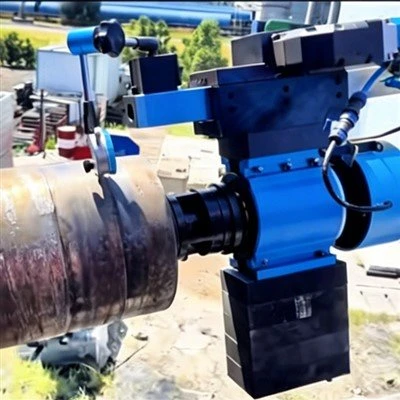
Don’t wait until your next job has a problem to take care of your tools. Reach out today to connect with our team and learn more about how we can support your line boring operations, or to browse our full range of high-quality, durable accessories built to stand up to regular use and proper maintenance.
Bore Welder References:
- Machine Tool Maintenance: Principles and Practice, Industrial Press, 2021.
- Heavy Equipment Repair and Precision Machining Standards, National Institute for Metalworking Skills, 2022.
- Line Boring Accessory Wear Analysis, Journal of Machining and Materials Processing, Vol. 8, No. 2, 2023.
Shangqiu JDA Machinery Technology Co., Ltd.
With abundant experience, we are one of the most professional line boring accessories manufacturers and suppliers in China. We warmly welcome you to buy cheap line boring accessories for sale here from our factory. Quality products and reasonable price are available.
Address: No. 55 Pingyuan Middle Road, Liangyuan District, Shangqiu, Henan, China
E-mail: sales@jdamachines.com
WebSite: https://www.jdamachines.com/
