Hey there! I’m in the business of supplying industrial air coolers, and one question I get asked a lot is, "Do industrial air coolers need ventilation?" Well, let’s dive into this topic and find out. Industrial Air Cooler
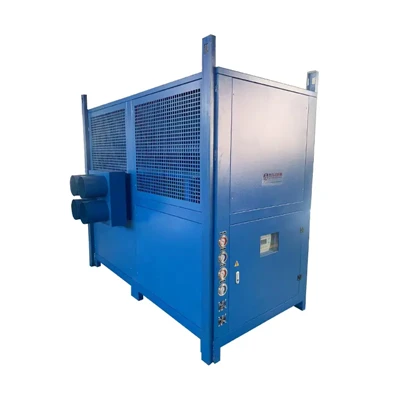
First off, let’s understand what industrial air coolers are. They’re these cool machines (pun intended) that use the principle of evaporative cooling to lower the temperature in large industrial spaces. They work by pulling in hot air from the surroundings, passing it through water – soaked pads, and then blowing out cooler, moist air.
Now, let’s talk about ventilation. Ventilation is all about moving fresh air in and stale air out of a space. It’s crucial for maintaining good air quality and a comfortable environment, especially in industrial settings where there might be a lot of pollutants, heat, and moisture.
So, do industrial air coolers need ventilation? The short answer is yes, and here’s why.
Air Quality
In industrial environments, there are often all sorts of pollutants. You’ve got dust, fumes from machinery, and maybe even chemical vapors. When you run an industrial air cooler without proper ventilation, the same air gets recirculated over and over again. This means that all those pollutants just keep building up in the air.
For example, in a manufacturing plant where they’re welding metal, there are all these metal fumes in the air. If you don’t have ventilation and you’re just using an air cooler to cool the space, those fumes can stay in the air and cause health problems for the workers. With proper ventilation, fresh air can come in and dilute these pollutants, making the air safer to breathe.
Moisture Control
Industrial air coolers add moisture to the air as part of the evaporative cooling process. Without ventilation, this moisture can build up to high levels. High humidity can lead to a bunch of problems.
First of all, it can make the environment feel sticky and uncomfortable. You know how it feels on a really humid summer day? Multiply that by ten in an industrial space, and it’s not a pleasant place to work.
Secondly, excessive moisture can damage equipment. Rust can form on metal parts, and electrical components can short – circuit. In a food processing plant, for instance, high humidity can lead to mold growth on food products and storage areas. Ventilation helps to remove this excess moisture from the space, keeping the humidity levels in check.
Cooling Efficiency
You might think that an air cooler can do its job just fine on its own, but ventilation actually helps it work better. When you have proper ventilation, there’s a constant flow of air. This means that the hot air around the air cooler is constantly being replaced with new hot air.
The air cooler works by evaporating water to cool the air. If the same hot air keeps sitting around the cooler, the air starts to get saturated with moisture, and the cooling efficiency drops. But with ventilation, the cooler is always getting fresh hot air to work with, and it can keep cooling effectively.
For example, in a large warehouse, if there’s no ventilation, the air near the air cooler will quickly become cool and moist, and the cooler will struggle to cool the rest of the space. But with ventilation, the cooler can keep up with the demand and cool the entire warehouse more evenly.
Types of Ventilation for Industrial Air Coolers
There are a few different ways to provide ventilation when using industrial air coolers.
Natural Ventilation
This is the simplest form of ventilation. It involves using windows, doors, or vents to let fresh air in and stale air out. In some industrial buildings with a lot of windows, you can open them up to create a cross – breeze.
For example, in a small – scale woodworking shop, opening the front and back doors can create a natural flow of air. The fresh air comes in through one door, passes through the space where the air cooler is working, and then exits through the other door. This helps to remove pollutants and excess moisture.
Mechanical Ventilation
This is a more advanced option. It uses fans or blowers to move air in and out of the space. There are two main types of mechanical ventilation: exhaust ventilation and supply ventilation.
Exhaust ventilation works by using fans to pull stale air out of the space. In an industrial kitchen, for example, exhaust fans can be installed on the ceiling to remove smoke, heat, and cooking odors. When used with an air cooler, exhaust ventilation helps to get rid of the excess moisture and pollutants that the air cooler might stir up.
Supply ventilation, on the other hand, brings fresh air into the space. You can use fans to blow fresh air from the outside into the building. This is great in areas where there isn’t a lot of natural ventilation. In a closed – off manufacturing facility, supply ventilation can ensure that there’s a constant supply of fresh air for the air cooler to work with.
Factors to Consider
When thinking about ventilation for industrial air coolers, there are a few factors you need to consider.
Space Size
The size of the industrial space matters a lot. A small workshop might be fine with just natural ventilation and a couple of small air coolers. But a large factory floor will probably need a more complex mechanical ventilation system.
If you have a really big space, you need to make sure that the ventilation system can move enough air to keep the air quality and humidity levels in check. You might need multiple fans or larger – capacity ventilation units.
Type of Industry
Different industries have different ventilation requirements. A chemical plant will have much stricter ventilation needs than a textile factory. In a chemical plant, there are often hazardous chemicals that need to be removed from the air immediately. So, the ventilation system has to be designed to handle these specific pollutants.
On the other hand, a textile factory might have more of a problem with dust. So, the ventilation system should be focused on filtering out dust particles.
Climate
The local climate also plays a role. In a hot and dry climate, you might be able to get away with less ventilation because the air is naturally less humid. But in a hot and humid climate, you’ll need more aggressive ventilation to remove the excess moisture added by the air cooler.
For example, in tropical regions, you might need to run your ventilation system at a higher capacity to keep the humidity levels down and make the space comfortable for workers.
Conclusion
So, to sum it all up, industrial air coolers definitely need ventilation. Ventilation is essential for maintaining good air quality, controlling moisture, and improving the cooling efficiency of the air coolers. Whether you choose natural or mechanical ventilation, it’s important to make sure that your industrial space has a proper ventilation system in place.
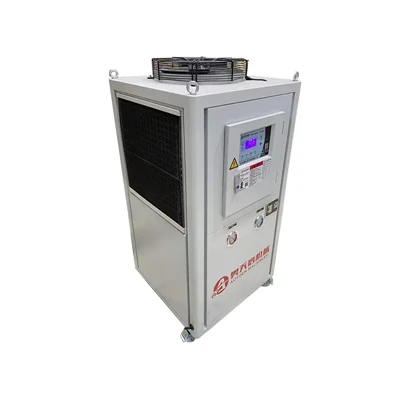
If you’re in the market for industrial air coolers and need advice on the right ventilation setup for your space, don’t hesitate to reach out. We’ve got years of experience in supplying industrial air coolers and can help you find the perfect solution for your needs. Contact us for a discussion about how we can upgrade your industrial cooling and ventilation system.
Chiller Unit References
- "Industrial Ventilation: A Manual of Recommended Practice", American Conference of Governmental Industrial Hygienists
- "Evaporative Cooling Handbook", The Cooling Technology Institute
- Various industry reports on industrial climate control and air quality management
Kunshan Aotianxin Machinery Co., Ltd.
We’re well-known as one of the most reliable industrial air cooler manufacturers in China. With abundant experience, our factory offer high quality industrial air cooler made in China with low price. If you have any enquiry about quotation and free sample, please feel free to email us.
Address: 550 Shengguang Road, Bacheng Town, Kunshan City, Jiangsu Province
E-mail: 1516722561@qq.com
WebSite: https://www.atxks.com/
