As a supplier of DC Brush Planetary Gear Motors, I’ve encountered numerous inquiries about various technical aspects of our products. One question that frequently comes up is, "What is the ripple torque in a DC Brush Planetary Gear Motor?" Today, I’ll delve into this topic in detail to provide a comprehensive understanding. DC Brush Planetary Gear Motor

What is Ripple Torque?
Ripple torque refers to the periodic fluctuations in the output torque of a motor. In a DC Brush Planetary Gear Motor, this phenomenon is an inherent characteristic that can affect the motor’s performance in different applications. Unlike the steady – state torque, which represents the average torque output of the motor under normal operating conditions, ripple torque causes momentary variations around this average value.
To understand why ripple torque occurs in a DC Brush Planetary Gear Motor, let’s first look at its basic working principle. A DC Brush Motor operates based on the interaction between the magnetic field generated by the stator and the current – carrying conductors in the rotor. When the commutator changes the direction of the current in the rotor coils as the motor rotates, the magnetic force acting on the rotor experiences small variations.
In addition, the planetary gear system in the motor also plays a role. Planetary gears consist of a sun gear, planet gears, and a ring gear. As the gears mesh and rotate, the contact points and the load distribution change continuously. This non – uniform load distribution during the meshing process contributes to the generation of ripple torque.
Causes of Ripple Torque
1. Commutation Effects
The commutation process in a DC Brush Motor is a major source of ripple torque. Every time the commutator segments pass by the brushes, the current in the rotor windings is switched. This sudden change in current leads to a corresponding change in the magnetic force on the rotor. Due to the finite number of commutator segments and the mechanical nature of the brush – commutator contact, these current changes are not perfectly smooth, resulting in torque ripples.
For example, if we consider a motor with a small number of commutator segments, the current transitions between the segments will be more abrupt. This abruptness causes larger fluctuations in the magnetic force, and thus, more significant ripple torque.
2. Gear Mesh Imperfections
The planetary gear system in a DC Brush Planetary Gear Motor is designed to provide high torque and speed reduction. However, the meshing of gears is not an ideal process. There are always manufacturing tolerances in gear production. These tolerances can cause variations in the tooth profile, pitch, and helix angle of the gears.
When the gears mesh, these imperfections lead to non – uniform force transmission. At some points during the gear rotation, the contact force between the teeth may be higher or lower than the average value, resulting in torque fluctuations. Moreover, the lubrication condition of the gears also affects the smoothness of the gear mesh. Insufficient or improper lubrication can increase friction and wear, further exacerbating the ripple torque.
3. Magnetic Field Non – Uniformity
The magnetic field in the stator of a DC Brush Motor may not be perfectly uniform. There can be variations in the magnetic flux density due to factors such as core material properties, manufacturing processes, and magnetic saturation.
These non – uniform magnetic fields cause the magnetic force acting on the rotor conductors to vary as the rotor rotates. As a result, the torque output of the motor fluctuates, contributing to the ripple torque.
Effects of Ripple Torque
1. Vibration and Noise
One of the most noticeable effects of ripple torque is the generation of vibration and noise in the motor. The periodic changes in torque cause the motor components to vibrate at a frequency corresponding to the ripple frequency. This vibration can be transmitted to the surrounding structure, leading to an audible noise.
In applications where quiet operation is required, such as in medical devices or home appliances, high ripple torque can be a significant drawback. Excessive vibration can also cause mechanical wear and tear over time, reducing the lifespan of the motor and the associated components.
2. Speed Fluctuations
Ripple torque can also cause speed fluctuations in the motor. Since torque and speed are related in a motor, the periodic variations in torque will result in corresponding variations in the rotational speed.
In applications that require precise speed control, such as in robotics or machine tools, these speed fluctuations can lead to inaccurate positioning and reduced performance. The control system needs to compensate for these fluctuations, which may increase the complexity and cost of the control system.
3. Reduced Efficiency
The presence of ripple torque can lead to reduced motor efficiency. The additional energy required to overcome the torque fluctuations is dissipated as heat, which not only wastes energy but also increases the operating temperature of the motor.
Higher operating temperatures can degrade the performance of the motor’s magnetic materials, insulation, and lubricants, further reducing the motor’s efficiency and reliability in the long run.
Measuring Ripple Torque
Measuring ripple torque is essential for evaluating the performance of a DC Brush Planetary Gear Motor. There are several methods available for measuring ripple torque.
One common method is to use a torque transducer. A torque transducer is a device that converts the torque applied to it into an electrical signal. By attaching a torque transducer to the output shaft of the motor, the torque variations can be measured and recorded. The data obtained from the torque transducer can be analyzed to determine the amplitude and frequency of the ripple torque.
Another method is to use current measurement. Since the torque of a DC motor is proportional to the armature current, monitoring the armature current can provide an indirect measurement of the torque. By analyzing the current waveform, the torque ripples can be estimated. However, this method requires careful calibration and consideration of other factors that may affect the current, such as back – EMF and electrical resistance.
Minimizing Ripple Torque
As a DC Brush Planetary Gear Motor supplier, we are committed to minimizing the ripple torque in our products to meet the high – performance requirements of our customers. Here are some of the techniques we use:
1. Optimized Commutation Design
We design our motors with a higher number of commutator segments to reduce the abruptness of current switching. This results in smoother current transitions and reduced ripple torque. Additionally, we use high – quality brushes and commutators with good electrical and mechanical properties to ensure stable and reliable commutation.
2. High – Precision Gear Manufacturing
We invest in advanced gear manufacturing technologies and equipment to ensure precise tooth profiles and tight manufacturing tolerances. This reduces the non – uniformity in gear meshing and minimizes the contribution of the gear system to ripple torque. We also pay close attention to the lubrication of the gears, using high – quality lubricants that can reduce friction and wear.
3. Improved Magnetic Circuit Design
We optimize the magnetic circuit design of our motors to minimize magnetic field non – uniformity. This includes using high – quality magnetic materials, carefully designing the shape and dimensions of the stator and rotor cores, and ensuring proper magnetic saturation levels.
Conclusion
Ripple torque is an important aspect to consider when using a DC Brush Planetary Gear Motor. Understanding its causes, effects, measurement methods, and mitigation techniques is crucial for selecting the right motor for different applications.
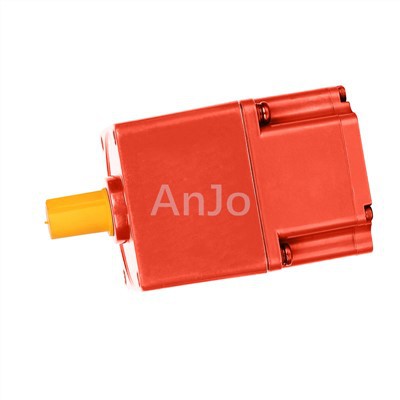
As a reliable DC Brush Planetary Gear Motor supplier, we have the expertise and experience to provide high – quality motors with low ripple torque. Our products are designed and manufactured to meet the strictest quality standards and performance requirements.
BLDC Square Gear Motor If you are interested in our DC Brush Planetary Gear Motors or have any questions regarding ripple torque or other technical aspects, please feel free to contact us for a detailed discussion. We look forward to partnering with you in your projects and providing you with the best motor solutions.
References
- "Electric Motors and Drives: Fundamentals, Types and Applications" by Austin Hughes and Bill Drury.
- "Gear Design and Application" by Dudley Darle W.
- Technical papers on DC motor design and performance published in IEEE Transactions on Industry Applications.
Hangzhou ANG Drive Co., Ltd.
We’re well-known as one of the leading dc brush planetary gear motor manufacturers and suppliers in China, also support custom service. Please feel free to wholesale high quality dc brush planetary gear motor made in China here from our factory. Contact us for more details.
Address: No.185, Jincheng Rd., Hangzhou 311202, China
E-mail: export6@angdrive.com
WebSite: https://www.angdrive.com/
