If you’ve ever stopped at a stoplight and watched a gust of wind carry a wisp of burning leaf from a roadside trash fire toward a nearby carport, you’ve probably wondered: how well do these structures hold up when fire is a risk? As a carport supplier who’s spent 12 years helping homeowners, small business owners, and property managers pick structures that work for their climate, location, and budget, fire resistance isn’t just a buzzword to me—it’s a make-or-break detail that too many people overlook until it’s too late. I’ve seen firsthand how a poorly chosen carport can turn a small brush fire spot into a total loss for a vehicle, tools, or even outdoor living space, so today I’m breaking down what fire resistance actually means for carports, what factors shape it, and how to pick one that keeps your stuff safe. Carport

First, let’s get clear on what fire resistance isn’t. A lot of people think fire resistance means a structure won’t catch fire at all—but that’s not realistic. Nearly all building materials, even concrete, will degrade when exposed to extreme heat over time. Fire resistance, for carports, is a standardized measurement of how long a structure can withstand a specific level of heat or flame before it fails, lets fire spread, or loses its ability to protect what’s inside. The most common benchmark used in North America and many parts of the world is the 1-hour fire-resistance rating, though some regions require 2 or even 3 hours for structures in wildfire-prone areas. That rating doesn’t mean the carport survives a full wildfire—it means it holds up long enough for firefighters to respond, or for you to move your vehicle or valuables to safety.
So what materials give a carport the best fire resistance? Not all carports are built the same, and the core material makes the biggest difference. Let’s start with the big three: steel, aluminum, and wood, since those are the most popular for residential and light commercial carports.
Steel is, hands down, the most fire-resistant option for standard carports. Unlike wood, which ignites around 572°F (300°C), steel has a much higher ignition point—around 2,750°F (1,500°C), which is nearly the temperature of a typical house fire. But here’s the catch: regular mild steel will warp when exposed to heat over 1,000°F (538°C) after about 15 to 20 minutes, which is why some budget steel carports might not pass fire-resistance tests. That’s why we use galvanized steel with a fire-resistant coating in our standard models: the zinc coating slows heat absorption, and a baked-on powder coat (specifically a Class A fire-rated finish) adds an extra layer that resists flame spread. We test all our steel carports to meet ASTM E119, the standard test for fire resistance of building materials, which means they can withstand direct flame exposure for up to 90 minutes without structural failure. That’s more than enough time for a quick response from local fire departments, which average under 10 minutes for most urban and suburban areas, and even up to 30 minutes for rural locations.
Next, aluminum. Aluminum is lighter than steel, which makes it a popular pick for homeowners who want to DIY install, but its fire resistance is a bit trickier. Aluminum melts at around 1,220°F (660°C), which is lower than steel’s warping temperature. However, unlike thin aluminum foil, the thicker metal used in carports (usually 0.024 to 0.032 gauge) can resist heat for much longer. When we build aluminum carports for clients, we use corrosion-resistant, heat-treated aluminum alloys that can hold up to 60 minutes of direct flame exposure. The downside? If a fire reaches temperatures high enough to melt aluminum, it will fail faster than steel, which is why aluminum carports are better for areas with low wildfire risk, like the Pacific Northwest’s coastal regions where humidity is high and brush fires are rare. We always recommend matching the material to the local fire risk to our clients, not just going for the cheapest option.
Wood carports are the most common for traditional, rustic properties, but their fire resistance is the lowest of the three. Natural wood ignites quickly, and even pressure-treated wood (which gets a chemical coating to resist rot and insects) can’t prevent it from catching fire in a wildfire or near a grill fire. That said, not all wood is equal. We offer fire-retardant treated wood (FRTW) carports for clients who want the wood aesthetic but need extra fire protection. FRTW wood is infused with chemicals that slow ignition and charring; it can last for 30 to 45 minutes in direct flame, which is better than untreated wood, but still not as good as steel or aluminum. FRTW is a good middle ground for people who live in moderate fire zones, but we never recommend it for high-risk wildfire areas like Southern California, Arizona, or parts of the Rocky Mountains.
It’s not just the frame material that affects a carport’s fire resistance—there are a few hidden factors that most people don’t think about. First, the roof material. A carport’s roof is the part closest to the ground, where sparks from a grill, a cigarette, or a brush fire will land. If you have a wooden roof with asphalt shingles, that’s a huge fire risk—those shingles ignite instantly and can spread fire to the frame. That’s why all our carport roofs are made from either corrugated steel, aluminum, or Class A fire-rated polycarbonate panels. Polycarbonate is a flexible, lightweight material that’s often used for patio covers; it resists flame spread and won’t melt or drop embers, which is perfect for clients who want a see-through roof to let in sunlight without fire risk.
Another hidden factor is spacing and location. Even the most fire-resistant carport will be less effective if it’s built too close to your home, a shed, or a line of dry brush. Building codes in wildfire-prone areas usually require carports to be at least 10 feet away from other structures, but some areas mandate 30 feet if they’re made of wood. We always help our clients check local fire codes before installation, because a carport that’s installed too close might not be covered by insurance if it’s damaged in a fire. Also, if you have an attached carport (a carport that’s connected to your house instead of being a free-standing structure), its fire resistance is even more important—if it fails, it can spread fire directly to your home’s exterior walls, which is why we recommend steel attached carports for clients in high-fire zones.
I also get asked all the time: does fire resistance mean my car inside is safe? Not exactly. A carport’s job is to slow fire spread, not make the vehicle fireproof. But a fire-resistant carport can buy you critical time to move the car, or at least protect it from minor flame and heat damage while you call for help. For example, if a small grass fire starts 20 feet from your house, a steel carport can keep embers from landing on your car’s hood and catching the engine bay on fire, while also blocking direct flame from reaching the vehicle. If you have a classic car or a work vehicle that you can’t afford to replace, that extra time is worth the investment in a fire-resistant carport.
Of course, fire resistance isn’t the only factor when choosing a carport—you also have to consider budget, size, and style. But here’s the thing: cutting corners on fire resistance might save you a few hundred dollars upfront, but it can cost you thousands in repairs or replacements if a fire hits. Last year, a client in Phoenix told me he saved $800 by buying a budget wooden carport from a big-box store instead of our steel model. A month later, a stray ember from a neighbor’s wildfire spread to his carport, burned through the wooden roof, and destroyed his $25,000 work truck. He ended up paying twice as much to replace the truck and the carport as he would have spent on the fire-resistant model in the first place. That story stuck with me, which is why I always prioritize educating clients about fire resistance instead of just pushing the most expensive model.
If you’re in the market for a carport, here are a few questions to ask to make sure you’re getting one with good fire resistance:
- What’s the fire-resistance rating according to a standard like ASTM E119? If the seller can’t give you a specific number (like 90 minutes for steel, 60 minutes for aluminum), that’s a red flag.
- What’s the roof material? Make sure it’s a Class A fire-rated material, not asphalt shingles or standard wood.
- Is the frame material galvanized or heat-treated? Budget steel carports often use thin, uncoated steel that warps quickly in heat.
- Does the design meet local fire codes? We always keep a list of code requirements for every region we serve, and we help clients adjust their carport design to fit those rules.
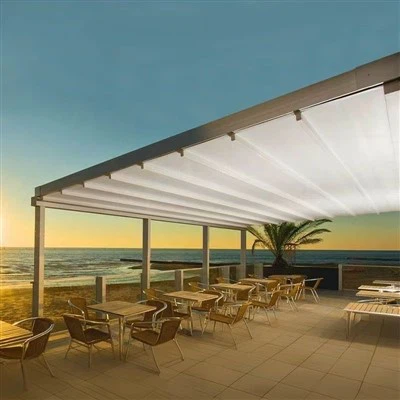
At the end of the day, a carport is more than just a place to park your car. It’s an investment in protecting your property, your belongings, and even the safety of your family. Fire resistance isn’t just a technical detail—it’s a way to give yourself peace of mind, no matter where you live. If you’re ready to pick a carport that fits your needs, your budget, and your fire risk level, don’t hesitate to reach out to our team to start a conversation about your options. We’ll walk you through every step, answer all your questions, and make sure you get a carport that keeps your stuff safe for years to come.
Window Canopy References
- ASTM International. (2022). Standard Test Methods for Fire Tests of Building Construction and Materials (ASTM E119).
- National Fire Protection Association. (2021). NFPA 221: Standard for High Challenge Fire Walls, Fire Walls, and Fire Barrier Walls.
- Wildland-Urban Interface Council. (2020). Carport Fire Resistance Guidelines for WUI Structures.
- American Iron and Steel Institute. (2019). Fire Resistance of Steel Carport and Building Systems.
- Aluminum Association. (2021). Fire Performance of Extruded Aluminum Building Components.
Guangdong Fanxi Youpin Intelligent Technology Co., Ltd.
We are one of the most professional carport manufacturers and suppliers in China, also support customized service with low price. We warmly welcome you to buy high quality carport for sale here from our factory. If you have any enquiry about pricelist, please feel free to email us.
Address: No. 22-2 Of Xiaodong Industrial Zone, Xiaodong Second Economic Society, Yanfeng Community, Shishan Town
E-mail: SunnyChueng@fshpyp.cn
WebSite: https://www.vancyoutdoor.com/
