If you’ve ever worked in retail, pop-up events, or even a small home workshop that relies on display shelves, you know how gutting it is when one of your core units takes a hit. Last month, a regular client— a local specialty skincare brand I supply shelving to—called me in a panic. Their floor shelf, which holds their best-selling serum sets, had a front edge crack along its base and a wobbly side brace after a stock shipment slipped and knocked the unit into a floorstand. Instead of replacing the whole shelf (which we all know wastes money and time), I walked the brand’s operations team through a repair that’s been battle-tested on hundreds of our own units over the 8 years I’ve run this business. Today, I’m sharing that process here, because fixing a damaged display shelf doesn’t have to be a hassle— and most small issues are fixable with tools you probably already have on hand. Display Shelf

First, a quick reality check: not every damaged shelf is worth repairing. If you’ve got a unit with a splintered core that’s warped beyond flat, or a broken metal frame that’s bent so far it can’t hold weight, it’s better to opt for a replacement. But for 90% of the damage we see—cracks in the particleboard or MDF (the most common materials we use for standard display shelves), loose brackets, or scuffed edges—this step-by-step process will bring it back to a usable state, often stronger than before.
Before we dive in, let’s gather the tools you’ll need, tailored to the most common shelf materials we work with at our company: MDF, particleboard, and thin veneer hardwood. You won’t need fancy industrial gear here: a Phillips-head screwdriver, a rubber mallet, wood glue (PVA is the best pick for porous display shelf materials, it’s strong, sandable, and non-toxic for retail settings), wood filler that matches your shelf’s color (light oak, white, or black are our top three), clamps (even a few heavy-duty rubber bands work if you don’t have clamps), 220-grit sandpaper, a putty knife, and a soft cloth for wiping away excess glue. If your shelf has metal brackets, keep a small wrench handy too—those loose or rusted brackets are the second most common issue after edge cracks.
Now, let’s break this down by the three most frequent damage types we handle in our service calls, since that’s what our clients face most often.
The first and most common: Edge cracks on MDF or particleboard shelves. This is what the skincare brand dealt with last month. When I got to their store, that front edge crack was 6 inches long, running along the bottom of the shelf where it meets the base. For this repair, start by cleaning the crack first—use a dry cloth to wipe away any dust or dirt, because if there’s debris in the gap, the glue won’t bond properly. Next, squeeze a generous amount of wood glue into the crack, then use the flat end of a putty knife (or even a credit card, if you’re in a pinch) to work the glue deep into the gap. You want to make sure every part of the crack is filled, not just the surface. Once that’s done, clamp the cracked section tightly shut. If you don’t have clamps, wrap heavy rubber bands around the affected area, spaced every 2 inches, and pull them as tight as you can—just make sure the edges are aligned perfectly, no gaps, because even a small misalignment will show once the glue dries. Let the glue cure for at least 2 hours; PVA glue needs full curing time (usually 24 hours) for maximum strength, so if the shelf is going to hold heavy stock, wait that full period before moving on.
After the glue is fully dry, it’s time to fill the gap. Take your matching wood filler, and use the putty knife to smooth it over the repaired crack, making sure you cover the entire area and slightly overfill it—this way, when you sand it, you’ll get a smooth, even surface that matches the rest of the shelf. Let the filler dry according to the package instructions (usually 30 minutes to an hour), then sand it lightly with 220-grit sandpaper, moving in the direction of the shelf’s grain to avoid scratching. Wipe away all the sanding dust with a soft cloth, and the crack will be almost invisible. We even add this step to our own shelf quality checks after a minor scratch or edge chip, because it keeps our display units looking polished for retail floors.
The second most common damage: Wobbly or loose brackets. We see this all the time with wall-mounted or tiered display shelves, where the brackets that hold the shelf to the frame work loose over time, or get bent when stock is stacked too heavily. For this, start by removing the shelf from the frame, if possible, so you can access the bracket screws. Inspect the screw holes first—if the screw holes are stripped (that’s a common issue when someone over-tightens the screws), grab some wood shims or even small pieces of cut-up wooden toothpicks coated in wood glue. Insert the toothpicks into the stripped hole, break off the excess, and let the glue cure for 10 minutes, then re-drill a small hole where the old one was. This simple trick fixes stripped holes 9 times out of 10, no need to replace the bracket entirely. If the bracket itself is bent, use a rubber mallet to gently tap it back into shape—just don’t hit it too hard, because thin metal brackets can snap if you’re rough. Once the bracket is straight and the screw holes are secure, reattach the shelf and test it by gently wiggling it. If it doesn’t move, you’re good to go. For our clients, we recommend tightening bracket screws once a month for wall-mounted shelves, because that small step prevents most wobbles before they start.
The third type of damage: Surface scuffs or chips, which are less structural but ruin the polished look of a display shelf—critical for retail, where first impressions matter. For small scuffs on veneer or painted shelves, you can use a matching furniture marker (we keep these on hand for our own field repairs) to color over the scuff, then buff it with a soft cloth to blend it in. For deeper chips, just like with edge cracks, use wood filler that matches your shelf’s color, fill the chip, let it dry, sand it smooth, and wipe away the dust. We’ve had clients use this trick to fix chips on high-end display shelves for luxury watch brands, and most customers never notice the repair unless we point it out.
Wait, there’s one more thing: if your display shelf is a custom unit—like a branded unit with your company’s logo, or a wood-finished shelf made of solid hardwood—you need to adjust the repair a little. For solid hardwood shelves, we recommend using wood filler specifically made for hardwood, because it’s flexible and won’t crack when the wood expands or contracts with temperature changes. For branded custom shelves, if the scuff is on the logo area, a furniture marker might not be enough—you can use a small paint pen that matches the logo’s paint, or send a photo of the shelf to us, and we can recommend a product that matches exactly, since we stock the same paint and finish for our custom orders.
I’ve seen too many small business owners toss a perfectly good display shelf because of a small crack or a loose bracket, and that’s a waste of money—especially when display shelves are made to last for years, if maintained properly. That said, if the damage is more severe—like a shelf that’s sagging in the middle because the core is broken, or a metal frame that’s rusted all the way through—don’t force a repair. Our business specializes in making custom and standard display shelves for retail, pop-ups, and events, and we’d much rather help you pick a new unit that fits your space than see you risk injury or stock damage with a faulty repair.
For our regular clients, we also offer a quick repair service, where we can send a technician to your location to fix larger issues, but this DIY process works for most minor damage that pops up between service calls. The key takeaway here is that with the right tools and a little patience, most display shelf damage is fixable—you don’t have to be a carpenter to do it.
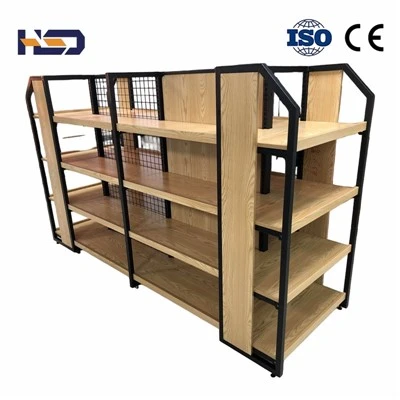
If you’re dealing with a damaged display shelf that you’re not sure how to fix, or you’re in need of new units for your upcoming launch, feel free to reach out to discuss your needs. We work with businesses of all sizes, from small local shops to large national retail chains, and can help you with everything from minor repairs to full custom display solutions. Don’t hesitate to connect— we’re here to keep your display units looking great and your products showcased properly.
Warehouse Rack References:
- Wood Repair Basics for Porous Surfaces, Fine Homebuilding, 2022.
- Retail Display Shelf Maintenance Best Practices, National Retail Federation, 2021.
- PVA Glue Applications for Furniture and Fixtures, Woodworking Network, 2020.
- Display Shelf Damage Mitigation Guide, Global Retail Design Association, 2023.
Jiangsu Bengu Metal Co., Ltd.
Jiangsu Bengu Metal Co., Ltd. is one of the most professional display shelf manufacturers and suppliers in China. Please feel free to wholesale bulk CE approved display shelf made in China here and get quotation from our factory. All customized products are with high quality and competitive price.
Address: South of chuangye Road, East of yuhuan Road, Changsi Industrial Zone, Sihong County, Jiangsu Province
E-mail: sales@hsdmetal.com
WebSite: https://www.hsdmetal.com/
