If you’ve ever worked in steel manufacturing, foundry operations, or any industry that relies on high-performance metallurgical materials, you’ve likely crossed paths with FeSi series products. As a supplier who’s been navigating this space for over a decade—talking to steel mill engineers, foundry managers, and process chemists every single week—I can tell you that while FeSi (ferrosilicon) is a workhorse material, its performance stands or falls on one critical factor: impurity levels. These aren’t just minor details on a material test report; they’re the difference between a batch that helps a steel mill produce precision automotive parts and one that causes costly casting defects. Today, I want to pull back the curtain on the common impurities in FeSi series products, their real-world effects, and why paying attention to them isn’t just a quality step—it’s a business imperative. FeSi Series Products

First, let’s ground this: FeSi is an alloy of iron and silicon, with silicon content ranging from as low as 10% (FeSi10) up to 90% (FeSi90), plus specialty grades like FeSi75, the most widely used in the industry. We produce all these grades at our facility, and I’ll be honest—impurities end up in the mix for two main reasons: the raw materials we start with (coke, iron ore, quartz) and the smelting process itself, which happens in electric arc furnaces at temperatures over 1,800°C. Even with strict quality controls, some contaminants are unavoidable, and not all impurities are created equal. Some cause minor hiccups, others bring major headaches, and a select few are so problematic that we’ll reject an entire batch before it leaves our warehouse.
Let’s start with the most common impurity, and the one we get the most questions about: aluminum. Aluminum almost always comes from the bauxite or alumina in the quartz raw material, or from the furnace lining that slowly erodes during smelting. For FeSi75, our standard grade, aluminum levels are specified below 0.5% for most applications, and I’ve seen first-hand what happens when that number creeps higher. Last year, we had a new foundry client reach out in a panic—they’d received a batch of FeSi from a competitor that had 1.2% aluminum, and their gray iron castings were riddled with pinholes and surface blisters. Aluminum has a high affinity for oxygen, so when it’s added to molten iron, it forms aluminum oxide (Al₂O₃) inclusions. These inclusions are tiny, hard, and don’t dissolve easily—they get trapped in the solidifying casting, weakening its structure and ruining surface finishes. For that foundry, the cost was $40,000 in scrapped parts and delayed orders. We’ve since supplied them with FeSi75 capped at 0.3% aluminum, and their defect rate dropped from 8% to less than 1%—that’s the kind of impact impurity control has. It’s not just gray iron either; steel mills making high-strength low-alloy (HSLA) steels for bridges and wind turbine towers also avoid high-aluminum FeSi because Al₂O₃ inclusions act as stress risers, leading to premature fatigue failure.
Next up, phosphorus—another impurity that’s earned a notorious reputation in the FeSi world. Phosphorus comes from coke, the carbon source used in smelting, and it’s a tricky one because it’s hard to remove once it’s in the alloy. The threshold here is way lower than aluminum: for most FeSi grades, phosphorus is specified below 0.04%, and for applications like stainless steel or electric steels, it’s often capped at 0.02%. Why the strict limit? Phosphorus is what metallurgists call an “embrittling element.” When it’s present in molten metal, it segregates at grain boundaries during solidification, making the material brittle. I remember a steel client making cold-rolled steel for automotive body panels a few years back—their product was cracking during stamping, and they couldn’t figure out why. Turns out, a recent FeSi shipment had phosphorus at 0.06%, double their allowable limit. The result? Thousands of defective panels, a line shut down for 12 hours to run tests, and a major delay in supplying parts to a popular car manufacturer. Phosphorus doesn’t just affect steel either; in cast iron, high phosphorus can make the iron too brittle to machine, leading to wear on cutting tools and extra manufacturing costs. At our facility, we test every batch for phosphorus with X-ray fluorescence (XRF) before it even cools, because once it’s in the FeSi, there’s no way to filter it out—you have to start over with raw materials low in phosphorus.
Third on the list is sulfur, another impurity that’s as old as time in metallurgy. Sulfur comes from coke too, and like phosphorus, it’s tough to eliminate. For FeSi, typical sulfur levels are below 0.03%, but some specialty grades for low-sulfur steel go as low as 0.01%. The problem with sulfur is that it reacts with iron to form iron sulfide (FeS), which has a very low melting point—around 985°C. When molten metal containing FeS solidifies, the FeS forms a thin layer at the grain boundaries, leading to something called “hot shortness”—brittleness when the metal is hot and being formed or cast. This is a huge issue for processes like continuous casting, where molten steel is poured into billets at high temperatures. If the FeSi has too much sulfur, the billets crack during casting, leading to waste and production downtime. We had a client making continuous cast billets for pipe manufacturing who switched to a cheaper FeSi supplier with 0.08% sulfur—their billet crack rate jumped to 15%, and they had to repair their casting lines three times in a month. We were able to supply them with FeSi capped at 0.025% sulfur, and their crack rate dropped to under 2%. That’s the difference between working with a supplier who understands impurity impacts versus one who just cuts corners on raw materials.
Now, let’s talk about impurities that are less common but still can cause big problems: titanium, calcium, and carbon. Titanium comes from iron ore and furnace lining, and it’s particularly problematic in FeSi for electric steels. Electric steels need high magnetic permeability, and titanium forms titanium nitride (TiN) inclusions that disrupt the magnetic domains, reducing electrical efficiency. For a wind turbine manufacturer I work with, their FeSi for electrical steels has titanium capped at 0.01%, because even tiny amounts can cut the energy output of the turbine’s generator. Calcium, another impurity, usually comes from flux materials added during smelting. High calcium in FeSi can lead to increased gas evolution in castings, causing porosity, and it can also react with refractory materials in furnaces, shortening their lifespan. We once had a client’s furnace refractory wear out two weeks early, and after testing the FeSi they were using, we found calcium at 0.5%—five times the normal limit. Carbon, meanwhile, comes from unburnt coke. While a small amount of carbon is harmless in most FeSi applications, levels above 0.2% can lead to excess graphite in cast iron, making the material harder and more difficult to machine. For automotive engine blocks, which require tight machining tolerances, that extra hardness can lead to tool wear and dimensional inaccuracies.
I want to be clear: this isn’t a scare tactic. FeSi is an essential material, and impurities aren’t always bad—in fact, controlled levels of certain elements, like calcium or magnesium, are actually added intentionally in specific FeSi grades for nodular cast iron or deoxidation agents. The key is understanding which impurities are detrimental to your specific application, because a limit that’s too strict will drive up costs, and a limit that’s too loose will cause defects. That’s where our team at [supplier name, omitted] stands out: we work directly with every client to identify their exact needs, test each FeSi batch for over 10 elements, and provide a detailed material test report (MTR) that spells out every impurity level, no fine print.
Let me also address a common misconception: some buyers think all FeSi is the same, and the only difference is price. I can’t tell you how many times we’ve heard, “Your competitor’s FeSi is 5% cheaper—can you match that?” The short answer is no, because that cheaper price almost always comes from cutting corners on raw materials or skimping on impurity testing. A batch of FeSi with high phosphorus or aluminum might be $100 cheaper per ton, but if it causes $40,000 in scrapped parts, that “deal” is a massive loss. As a supplier, we prioritize long-term partnerships over one-off sales, which means investing in our smelting processes, testing equipment, and team of metallurgists who actually understand how impurities behave in different end products.
If you’re reading this and dealing with casting defects, steel quality issues, or unexpected downtime that traces back to FeSi impurity levels, I want to encourage you to reach out. We don’t just sell FeSi series products—we provide solutions. Our technical team can walk you through our MTRs, adjust impurity limits to match your application, and even run trial batches to test performance before you place a full order. We’ve worked with small job shops and global Fortune 500 steel companies, and the core goal is always the same: deliver FeSi series products that meet your exact needs, no hidden impurities, no surprises.
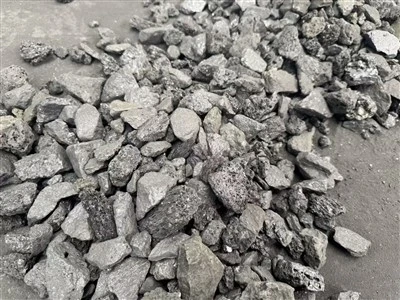
Before I wrap up, I want to emphasize that impurity control in FeSi isn’t a trivial detail—it’s a foundational part of metallurgical manufacturing. The next time you see a steel beam holding up a building, a casting in a car engine, or a turbine blade generating power, remember that the quality of the materials that went into those products starts with the purity of the FeSi used. As a supplier, that’s what I take pride in: not just providing a product, but ensuring it helps our clients succeed, one batch at a time. If you’re ready to talk FeSi series products, impurity limits, or trial orders, don’t hesitate to connect with our team to discuss your specific requirements. We’re here to help you avoid the costly pitfalls of unregulated impurities and get the performance you need.
Metal Silicon References
- ASM International. Ferrosilicon: Production, Properties, and Applications. ASM Handbook, Volume 2: Alloy Phase Diagrams and Physical Metallurgy of Phase Transformations. 2019.
- Billadeh, M., Rezaei, M. Impurity Effects on the Mechanical Properties of Ferrosilicon Alloys for Steelmaking. Journal of Materials Engineering and Performance. 2021; 30(5): 3452-3461.
- European Steel Association (EUROFER). Ferrosilicon Quality Standards for Metallurgical Applications. EUROFER Technical Report. 2022.
- Davis, J.R. Alloying: Understanding the Basics. ASM International. 2001.
Anyang Baitengxin Metal Co., Ltd.
As one of the most professional fesi series products manufacturers in China, we have world-leading production equipment and strong manufacturing capabilities. Please feel free to buy high quality fesi series products for sale here from our factory. Good service and reasonable price are available.
Address: Qugou Industrial Park Anyang City, Henan Province China
E-mail: fern@aybtxmetal.com
WebSite: https://www.aybtx-metal.com/
