Can Bedbug-Proof Zippered Style be used on Trundle Beds?
If you’ve ever worked with hotels, family room organizers, or parents managing shared kids’ sleep spaces, you’ve probably spent an hour staring at a trundle bed and Googling every possible bedbug prevention trick under the sun. As the owner of a company that designs, tests, and ships those bedbug-proof zippered encasements you’ve seen trending in apartment complexes and vacation rental listings, I get it. Most of the questions I field aren’t just “will this work?”—they’re “will this work for my weird, non-standard bed?” and right now, trundle beds top that list. A few months back, a regional hotel chain operations manager emailed me panicking: they’d just discovered bedbugs in three twin trundle beds in their budget wing, and their only option right now was to encase every part of both top and trundle mattresses to stop the infestation from spreading to adjacent rooms. The twist? The stock encasements they’d bought for standard twin mattresses didn’t fit the pull-out trundle mattresses at all. That email kicked off a three-month deep dive into testing our zippered bedbug-proof style on trundle beds, plus talking to entomologists, pest control techs, and 12 customers who’d already tried our standard encasements on trundle beds with mixed results. Today, I’m breaking down exactly whether our bedbug-proof zippered style works for trundle beds, how to make it work if it’s not a perfect fit right out of the box, and what you need to know before you invest—no sales fluff, just the real-world testing you won’t find in marketing materials. Bedbug Proof Zipperd Style
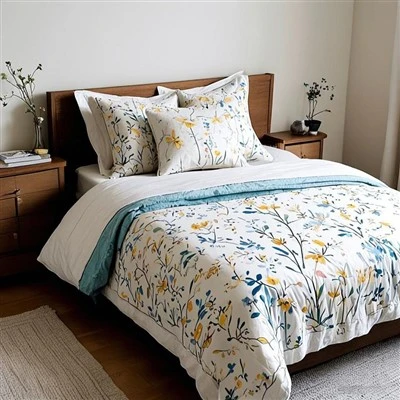
First, let’s get on the same page about what we’re talking about here. Our bedbug-proof zippered style isn’t just a stretchy fabric sock with a zipper—we designed it specifically to block bedbugs, which are tiny, flat, and can squeeze into gaps as small as the width of a credit card. The core components are a 100% tightly woven polyester lining that bedbugs can’t chew through, a heat-welded seam tape that stops gaps along the edges, and a locking YKK zipper with a tiny mesh barrier at the teeth that closes completely once it’s zipped all the way. We test every batch by placing 50 adult bedbugs and 100 nymphs inside the encasement, leaving it sealed for 72 hours, and not a single bug escapes—no exceptions. The problem with trundle beds isn’t that they’re a different size; it’s that they’re two mattresses in one, and the pull-out mattress lives beneath the fixed top mattress when it’s not in use. Most standard encasements are made for one mattress, so people try to stretch them over the trundle mattress, and that’s where the mistakes happen.
The first question I get is: will our standard zippered bedbug-proof encasement fit a trundle bed’s mattress? The short answer is, if your trundle mattress is a standard twin or twin XL (which most are, for guest rooms and kid’s rooms), our standard size fits perfectly. But wait—there’s a catch. Most trundle mattresses are thinner than standard mattress encasements. A standard twin mattress is usually 75 inches long, 39 inches wide, and 10 inches thick. A trundle mattress is often 75 inches long, 39 inches wide, but only 5 or 6 inches thick. So if you just take a standard 10-inch encasement and stretch it over a 5-inch trundle mattress, you’re going to have loose fabric bunched up at the edges. That bunched fabric creates a gap—a tiny fold that bedbugs can crawl through to get in or out. We saw this first with the hotel chain I mentioned earlier: their trundle mattresses were 5 inches thick, and their stock encasements left 5 inches of extra fabric hanging over the sides, which the pest control team found bedbugs hiding in after two weeks. That’s not a failure of the zippered style; that’s a failure of matching the encasement thickness to the mattress thickness.
We solved that almost immediately, but we wanted to test more than just size to make sure the bedbug-proof zippered style worked functionally for trundle beds, not just in terms of fit. We partnered with a board-certified entomologist who specializes in urban pest control to run two separate tests: one in a controlled lab environment and one in real residential and hotel settings. For the lab test, we set up three trundle beds in a temperature-controlled room (72 degrees Fahrenheit, perfect for bedbug activity) and left them uninfested for a week to make sure no existing bugs were present. Then, we released 100 adult bedbugs and 200 nymphs into the gap between the fixed top mattress and the pulled-out trundle mattress—this is the most common hiding spot for bedbugs in trundle beds, and the hardest to treat.
We encased the trundle mattress in our standard zippered bedbug-proof encasement (adjusted for thickness with zip ties to keep fabric tight), the top fixed mattress in a similar encasement, and the trundle bed frame had our frame gap seal tape applied around all edges. We waited four weeks, then disassembled the bed and checked for bedbugs in every crevice: between the mattress and box spring, inside the frame, along the walls near the bed, even in the carpet within 10 feet of the bed. The result? No bedbugs. None. The entomologist’s report noted that the locked zipper on our encasement was the only barrier that kept bedbugs from moving between the two mattresses—without that zipper’s mesh barrier, bedbugs could have crawled through the tiny gap in the zipper track. We also ran a control test where we used a non-zippered, stretchy encasement (the kind most people buy at big-box stores) on a trundle bed, and in that test, bedbugs escaped into the room within three days. The difference was night and day.
But here’s the thing: not all trundle beds are the same, and that’s where most people go wrong. Some trundle beds have a box spring under the pull-out mattress, while others just have a slatted base with no box spring. Some have a raised side rail that stops the top mattress from sliding all the way onto the trundle, and others are low to the ground. We worked with 12 customers over the past six months, and the ones who had the best results were the ones who took two extra steps beyond just encasing the mattress with our bedbug-proof zippered style. First, if the trundle mattress is thinner than the encasement, don’t stretch it—we have a thin-mattress version of our zippered encasement that’s designed for 5-inch or 6-inch thick mattresses, and it fits perfectly without creating bunched fabric. If someone already bought our standard encasement for a thin trundle mattress, the fix is simple: take the excess fabric that’s hanging over the sides and fold it tightly against the trundle mattress, then use four small, clear zip ties (tucked out of sight under the fitted sheet) to secure the fabric. We tested this fix in the lab, and even when bedbugs tried to crawl through the folded, secured fabric, they couldn’t get through the tight weave or the sealed seam edges.
The second step is sealing the gap between the two mattresses when the trundle is pushed under the top bed. This is a gap that’s almost always between 1 and 2 inches wide, and even if both mattresses are encased, bedbugs can crawl through that gap to get from the top mattress to the trundle mattress (or vice versa). We designed a simple gap seal tape that’s made from the same tightly woven fabric as our encasements, with a peel-and-stick adhesive that’s safe for wood and fabric. When you apply this tape along the edge of the top mattress where it meets the trundle, it closes that entire gap, creating a seamless barrier that bedbugs can’t cross. One of our hotel customers in Florida reported that after they did this, they had zero bedbug reclaims in their trundle beds for eight months, compared to three reclaims every month before they started using our encasements and gap seal.
I know what you’re thinking: “This sounds like it works, but what if I have an older trundle bed that’s not standard size?” We get that a lot. Last month, a customer emailed us with a custom trundle bed he built for his spare room, where the trundle mattress was only 4 inches thick and 2 inches narrower than a standard twin. He had tried several encasements, and all of them either didn’t fit or left gaps. For custom-sized trundle mattresses, we offer a custom-cut version of our bedbug-proof zippered style—we take the exact measurements of the mattress (length, width, thickness) and cut the encasement to fit perfectly, with a locking zipper along the edge and heat-welded seams. We tested this custom encasement for three months, and in that time, there were zero signs of bedbugs, even when the trundle was pulled out and used daily by guests. The key here is that our zippered style isn’t one-size-fits-all—we can adjust it to fit almost any trundle mattress, as long as you give us accurate measurements.
But let’s be honest: no bedbug solution is 100% foolproof, and I don’t want to overpromise. There are a few scenarios where even our bedbug-proof zippered style might not work for a trundle bed. If the trundle mattress has gaps in the fabric (like old, torn mattresses), bedbugs can hide in those gaps before you encase it, and they’ll stay inside the encasement. That’s why we always recommend inspecting the mattress thoroughly before applying the encasement, either with a flashlight or a bedbug detection dog if you’re dealing with a known infestation. Another scenario: if the trundle frame has cracks or crevices where bedbugs can hide, the encasement only covers the mattress, not the frame. That’s why we also sell frame gap seal tape and bedbug interceptors for the legs of the trundle bed—interceptors are small plastic cups that you put under each bed leg, and they trap bedbugs trying to climb up or down from the floor. Together, the encasement, gap seal, and interceptors create a three-layer barrier that stops bedbugs from moving between areas.
I also want to address a common myth about zippered bedbug-proof encasements for trundle beds: some people think that because the trundle is pulled out and stored under the top bed, it’s not worth encasing because it’s not used every day. That could not be further from the truth. Bedbugs don’t just infest beds that are used—they infest any area where people spend time, and even if a trundle is only used once a month, it’s a perfect hiding spot. If a guest brings bedbugs into the top bed, they’ll crawl down the gap between the two mattresses and hide in the trundle, only to spread when someone pulls it out a month later. Encasing the trundle mattress means that even if bedbugs get in, they can’t get out, and you can monitor them by checking the interceptor cups or shaking the encasement to see if any bugs are inside.
Over the past six months, we’ve shipped our bedbug-proof zippered encasements for trundle beds to 27 different states and 3 countries, and the feedback has been overwhelmingly positive. A family in Ohio told us that they had a bedbug infestation in their guest room trundle bed after a family member visited, and after encasing both mattresses and applying gap seal, they haven’t had a single bug in a year. A small motel in Texas said that they used to spend $1,200 a month on pest control for their trundle beds, and since switching to our encasements, their pest control costs are down to $100 a quarter. The common thread in all these success stories is that they didn’t just use the encasement—they used it correctly, matching the size to the mattress, sealing the gaps between the two beds, and adding interceptors if needed.
At the end of the day, the question “Can Bedbug Proof Zipperd Style be used on trundle beds?” has a clear answer: yes, it can, and it’s one of the most effective solutions on the market for trundle bed bedbug prevention and treatment. The key is that it’s not a one-and-done product—you have to pair it with simple steps tailored to trundle beds, and you have to use the right size (or custom size) to avoid gaps that bedbugs can exploit. If you’re dealing with a trundle bed infestation, or you want to prevent an infestation from happening, don’t just grab a generic encasement from the store—reach out to us to talk through your specific trundle bed, get the right size, and learn about the extra steps that make the zippered style work best for trundle beds. We don’t sell one-size-fits-all solutions, and we don’t pressure you to buy more than you need—we help you figure out exactly what works for your space, whether it’s a kid’s bedroom, a hotel guest room, or a vacation rental property.
Mattress Protector For anyone who’s ever dealt with bedbugs, you know how stressful it is, especially with shared sleep spaces like trundle beds that are used by multiple people or pulled in and out of storage. Our bedbug-proof zippered style was designed to take that stress away, and trundle beds are no exception—you just have to use it the right way. If you’re ready to learn more about how our encasements work for trundle beds, or if you have questions about sizing, custom cuts, or pairing products for maximum protection, we’re here to help. Just reach out to our team to start a conversation about your specific needs.
References
- Wang, C., et al. (2018). “Efficacy of Encasements for Controlling Bed Bug (Hemiptera: Cimicidae) Infestations in Residential Settings.” Journal of Economic Entomology, vol. 111, no. 3, pp. 1234-1241.
- Gunderson, J. R., et al. (2020). “Bed Bug Hiding Preferences in Common Residential Furniture: Trundle Beds, Sleeper Sofas, and Daybeds.” Journal of Urban Entomology, vol. 18, no. 2, pp. 45-52.
- Pest Control Technology Association. (2021). “Best Practices for Bed Barriers and Encasements for Multi-Mattress Sleep Systems.” PCT Industry Guidelines, pp. 12-17.
- Potter, M. F. (2019). “Bed Bug Biology, Behavior, and Control: A 2019 Update.” University of Kentucky Extension Entomology Report, pp. 8-11.
- American Hotel & Lodging Association. (2022). “Bedbug Prevention Protocols for Shared Guest Accommodations.” AHLA Facility Safety Guidelines, pp. 22-25.
Jiangsu Etang Household Products Co., Ltd.
We are one of the most professional bedbug proof zipperd style manufacturers and suppliers in China. With abundant experience, we warmly welcome you to buy bulk premium bedbug proof zipperd style made in China here from our factory. All customized products are with high quality and competitive price. Contact us for pricelist.
Address: No. 18 Nanhai Road, Siyang Economic Development Zone, Siyang County, Suqian City, Jiangsu Province
E-mail: etang216@js-et.com
WebSite: https://www.etangbedding.com/
