Hey there! I’m a supplier of machining centers, and I often get asked by customers about how to measure the performance of a machining center. It’s a crucial question because when you’re looking to invest in one, you wanna make sure you’re getting the best bang for your buck. So, I’m gonna share some tips and tricks that I’ve picked up over the years in the industry. Machining Centers
1. Accuracy
The first thing you gotta look at is accuracy. In the machining world, this is like the holy grail. Accuracy refers to how closely the machining center can produce parts that match the design specifications.
Positional Accuracy
Positional accuracy is about how well the machine can move to the right position. You can use a laser interferometer to measure this. It shoots a laser beam at a target on the machine’s table, and as the table moves, the interferometer measures any deviations in position. A good machining center should have a high positional accuracy, usually within a few microns. For example, if your design calls for a hole to be drilled at a specific X, Y, and Z coordinate, the machine should be able to hit that spot precisely.
Dimensional Accuracy
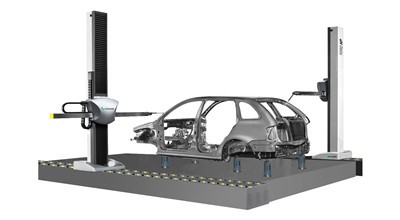
Dimensional accuracy is all about the size of the parts the machine produces. You can measure this using a coordinate measuring machine (CMM). The CMM has a probe that touches the surface of the machined part at various points to measure its dimensions. If your machining center is working well, the actual dimensions of the part should be very close to the designed dimensions. For instance, if you’re making a block that’s supposed to be 100mm long, the machined block should be around 100mm with only a tiny margin of error.
2. Repeatability
Repeatability goes hand in hand with accuracy. It’s about whether the machining center can produce the same results over and over again. You can test repeatability by running the same machining program multiple times.
For example, let’s say you’re machining five identical parts. You should check the dimensions and positional accuracy of each part. If the machining center has good repeatability, the differences between the parts should be minimal. A high – quality machining center can achieve a repeatability of ± a few microns. This is super important, especially if you’re producing a large batch of parts. You don’t want one part to be perfect and the next one to be way off.
3. Cutting Speed and Feed Rate
The cutting speed and feed rate are also key factors in measuring a machining center’s performance.
Cutting Speed
Cutting speed is the speed at which the cutting tool moves through the material. It’s measured in surface feet per minute (SFM) for imperial units or meters per minute (m/min) for metric. Different materials require different cutting speeds. For example, if you’re cutting aluminum, you can usually use a higher cutting speed than if you’re cutting steel. A machining center with a good performance can handle a wide range of cutting speeds, depending on the material and the tool you’re using.
Feed Rate
The feed rate is how fast the workpiece moves relative to the cutting tool. It’s measured in inches per revolution (IPR) or millimeters per revolution (mm/rev). A good machining center allows you to adjust the feed rate accurately. You need to find the right balance between cutting speed and feed rate. If the feed rate is too high, the cutting tool may wear out quickly or the part may have a rough surface finish. If it’s too low, the machining process will take a long time, which is not cost – effective.
4. Surface Finish
The surface finish of the machined parts is another important aspect. A smooth surface finish is often required, especially for parts that will be used in high – precision applications or for aesthetic reasons.
You can use a surface roughness tester to measure the surface finish. This device uses a stylus that moves across the surface of the part and measures the peaks and valleys. The results are usually expressed in microinches (µin) or micrometers (µm). A machining center that can produce a good surface finish gives you parts that look and perform better. The quality of the cutting tool, the cutting parameters (like speed and feed rate), and the stability of the machine all affect the surface finish.
5. Spindle Performance
The spindle is like the heart of the machining center, so its performance is crucial.
Spindle Speed
Spindle speed refers to how fast the spindle rotates. It’s measured in revolutions per minute (RPM). A high – performance machining center can reach a wide range of spindle speeds. For example, some modern machining centers can have a spindle speed of up to 40,000 RPM or even higher. This allows you to use different cutting tools and machine various materials effectively.
Spindle Power
Spindle power determines the amount of force that the spindle can deliver to the cutting tool. It’s measured in horsepower (HP) or kilowatts (kW). If you’re machining hard materials or removing a large amount of material quickly, you need a spindle with high power. Otherwise, the spindle may stall, and the cutting process won’t be efficient.
6. Tool Changing Time
In a production environment, time is money. The tool changing time of a machining center is an important performance indicator.
A quick tool changing time means less downtime between different machining operations. Modern machining centers are designed to have very fast tool changing times, often in the range of a few seconds. You can measure the tool changing time by timing how long it takes for the machine to change from one tool to another during a normal machining cycle.
7. Machine Stability and Rigidity
Machine stability and rigidity are essential for accurate and efficient machining.
A rigid machine can withstand the cutting forces without vibrating too much. You can check the machine’s rigidity by performing a simple test. Try to apply a moderate force on the machine’s table or spindle while the machine is running. If the machine vibrates excessively or the accuracy of the machining is affected, it may not be rigid enough.
Stability is related to the machine’s ability to maintain its performance over time. A machine that is stable will not drift out of alignment easily. You can monitor the machine’s performance over a period of time to check its stability.
So, there you have it – all the key factors you need to consider when measuring the performance of a machining center. If you’re in the market for a new machining center and want to make an informed decision, these are the things to look at.

If you’re interested in our machining centers, we’d love to talk to you. We’ve got a wide range of high – quality machines that can meet your specific needs. Whether you’re a small – scale workshop or a large manufacturing plant, we’ve got the right solution for you. Just reach out to us for a friendly chat and we can start discussing your requirements and how our machines can fit into your production process.
CNC Turning Centers References:
- "Machining Technology Handbook"
- "Modern Machining Processes and Equipment"
Hermens Industrial Co., Ltd.
As one of the most professional machining centers enterprises in China, we’re featured by quality products and low price. Please rest assured to buy cheap machining centers in stock here and get quotation from our factory. We also accept customized orders.
Address: 9/59 Moo 14, Rachathewa , Bang Phli , Samut Prakan Province 10540
E-mail: liu_jincheng@hzhemen.com
WebSite: https://www.hermensindustrial.com/
