Hey there! I’m a supplier of solenoid valves, and I’ve been in this business for quite a while. Solenoid valves are super important in a bunch of industries, from manufacturing to plumbing. They’re used to control the flow of liquids and gases, and they come in all sorts of types. In this blog, I’m gonna share with you the different kinds of solenoid valves I deal with and what they’re good for. Solenoid Valves
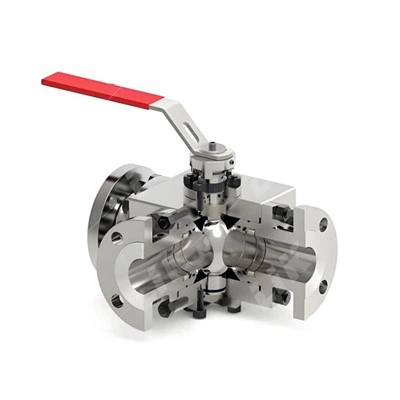
Direct – Acting Solenoid Valves
Let’s start with direct – acting solenoid valves. These are pretty straightforward. They work by directly opening or closing the valve seat with the help of an electromagnetic solenoid. When the solenoid is energized, it creates a magnetic field that moves a plunger. This plunger either opens or closes the valve, allowing or stopping the flow of the fluid.
One of the big advantages of direct – acting solenoid valves is that they can work at zero pressure differential. That means they can start working even when there’s no difference in pressure between the inlet and the outlet of the valve. This makes them great for applications where you need to control the flow right from the start, like in small water dispensers or some medical equipment.
However, they do have their limitations. They’re usually not suitable for high – flow applications. Because the plunger has to directly move against the fluid pressure to open or close the valve, they can get overwhelmed when there’s a large volume of fluid flowing. So, if you’re looking for something to handle a huge amount of liquid or gas, you might need to look elsewhere.
Pilot – Operated Solenoid Valves
Next up are pilot – operated solenoid valves. These are a bit more complex than the direct – acting ones. Instead of directly moving the main valve, the solenoid in a pilot – operated valve controls a small pilot valve. The pilot valve then changes the pressure in a chamber, which in turn moves the main valve.
The cool thing about pilot – operated solenoid valves is that they can handle much higher flow rates and pressures compared to direct – acting valves. They’re more efficient for large – scale applications, like in industrial water treatment plants or in the oil and gas industry. They can open and close large valves with relatively small solenoids, which saves energy and money.
But there’s a catch. Pilot – operated valves need a certain minimum pressure differential to work. If the pressure difference between the inlet and the outlet isn’t high enough, the valve won’t function properly. So, you have to make sure the system you’re using them in meets the pressure requirements.
Two – Way Solenoid Valves
Two – way solenoid valves are one of the most common types. As the name suggests, they have two ports: an inlet and an outlet. They can either be normally open or normally closed.
A normally open two – way solenoid valve allows fluid to flow through it when the solenoid is not energized. When you energize the solenoid, the valve closes, stopping the flow. On the other hand, a normally closed two – way solenoid valve blocks the flow when it’s not energized. When you turn on the solenoid, it opens, and the fluid can pass through.
These valves are used in a wide range of applications. For example, in a simple irrigation system, a normally closed two – way solenoid valve can be used to control the water flow to different sections of a garden. When you want to water a particular area, you energize the solenoid, and the valve opens to let the water through.
Three – Way Solenoid Valves
Three – way solenoid valves have three ports. They can be used to either divert the flow of fluid or mix different fluids. There are two main types of three – way solenoid valves: the L – port and the T – port.
The L – port three – way solenoid valve has an L – shaped internal passage. It can connect the inlet to one of the two outlets at a time. This is useful for applications where you need to switch between two different paths for the fluid. For example, in a heating system, you might use an L – port valve to switch the flow of hot water between a radiator and a storage tank.
The T – port three – way solenoid valve has a T – shaped passage. It can mix fluids from two inlets and send the combined fluid out through the outlet, or it can divert the fluid from the inlet to two different outlets simultaneously. This type of valve is often used in chemical mixing processes or in some HVAC systems.
Four – Way Solenoid Valves
Four – way solenoid valves have four ports. They are mainly used in applications that require the control of double – acting cylinders or actuators. A double – acting cylinder has two chambers, and the four – way valve can direct the fluid to either chamber to extend or retract the cylinder.
In industrial automation, four – way solenoid valves are used to control the movement of robotic arms or other mechanical devices. They can quickly and accurately change the direction of the fluid flow, which allows for precise control of the actuator’s movement.
High – Temperature Solenoid Valves
Some applications require solenoid valves that can withstand high temperatures. High – temperature solenoid valves are designed to work in environments where the fluid or the surrounding temperature can get really hot, like in furnaces or in some chemical processes.
These valves are made with special materials that can handle the heat. The seals and the solenoid coils are designed to resist thermal degradation. They also have better insulation to protect the internal components from the high – temperature environment.
Low – Pressure Solenoid Valves
On the other end of the spectrum, we have low – pressure solenoid valves. These are used in applications where the fluid pressure is very low. For example, in some pneumatic systems that operate at low pressures, or in some small – scale gas distribution systems.
Low – pressure solenoid valves are designed to be sensitive to small changes in pressure. They can open and close accurately even when the pressure difference is minimal. They’re also often more compact in size, which makes them suitable for applications where space is limited.
Explosion – Proof Solenoid Valves
In industries where there’s a risk of explosion, like in the mining or oil and gas industries, explosion – proof solenoid valves are a must. These valves are built to prevent the ignition of flammable gases or dusts.
They are enclosed in a special housing that can contain any explosion that might occur inside the valve. The electrical components are also designed to be spark – free, so they won’t cause an explosion in the surrounding environment.
Conclusion
So, there you have it! These are some of the main types of solenoid valves that I supply. Each type has its own unique features and is suitable for different applications. Whether you’re working on a small – scale project or a large industrial system, there’s a solenoid valve out there that can meet your needs.
If you’re in the market for solenoid valves, I’d love to talk to you. I can help you figure out which type is the best fit for your specific application. Just reach out, and we can start a discussion about your requirements. I’m always happy to offer advice and find the right solution for you.
Check Valve References:
- "Solenoid Valves: Principles, Operation and Selection" by various industry experts
- Technical manuals from leading solenoid valve manufacturers
Wuxi PYNOS Flow-tech Co., Ltd.
As one of the leading solenoid valves manufacturers and suppliers in China, we offer a wide range of products with superior quality. We warmly welcome you to buy high quality solenoid valves made in China here from our factory. We also accept customized orders.
Address: Sales Center: 7th Floor, No.19 Qingyuan RD, Wuxi City, Jiangsu Prov., China
E-mail: Info@pynosvalve.com
WebSite: https://www.pynosvalves.com/
